Prefabricated Structure: Smart Construction for Modern Projects

Prefabricated Structure: Smart Construction for Modern Projects
The construction industry is continuously moving towards solutions that offer faster execution, consistent quality, flexibility, and better project control. Prefabricated structures are becoming an increasingly practical choice for industrial, commercial, and infrastructure projects.
What Is a Prefabricated Structure?
A prefabricated structure is a building system in which major components are manufactured or assembled in a controlled factory environment and then transported to the project site for installation.
Unlike conventional construction, where much of the work happens directly at the site, prefabrication shifts a significant portion of the manufacturing process to a controlled environment. This allows components to be produced with greater consistency before being assembled on-site.
How Does Prefabricated Construction Work?
A typical prefabricated construction process involves:
- Design & Engineering : The structure is designed according to the project's dimensions, application, loading, and functional requirements.
- Factory Manufacturing : Components are manufactured under controlled conditions with quality checks.
- Transportation : Finished components are safely transported to the construction site.
- On-Site Assembly : Components are installed and connected according to the approved design.
- Completion : Finishing work and required installations are completed to make the structure ready for use.
Key Benefits of Prefabricated Structures
- Faster Construction : Factory-manufactured components can significantly reduce the amount of work required at the construction site, helping projects progress more efficiently.
- Consistent Quality : Manufacturing in a controlled environment allows better monitoring of dimensions, fabrication, materials, and workmanship.
- Cost Efficiency : Prefabrication can reduce certain on-site labour requirements, material wastage, and construction delays, helping improve overall project efficiency.
- High Precision : Components manufactured using controlled processes can achieve consistent dimensions and accurate connections, supporting faster and smoother assembly.
- Reduced Site Waste : Better material planning and factory-controlled production can help minimise unnecessary material waste compared with some conventional construction processes.
- Flexible Applications : Prefabricated systems can be designed for different building sizes, layouts, applications, and future requirements.
Where Are Prefabricated Structures Used?
Prefabricated construction is suitable for a wide range of applications, including:
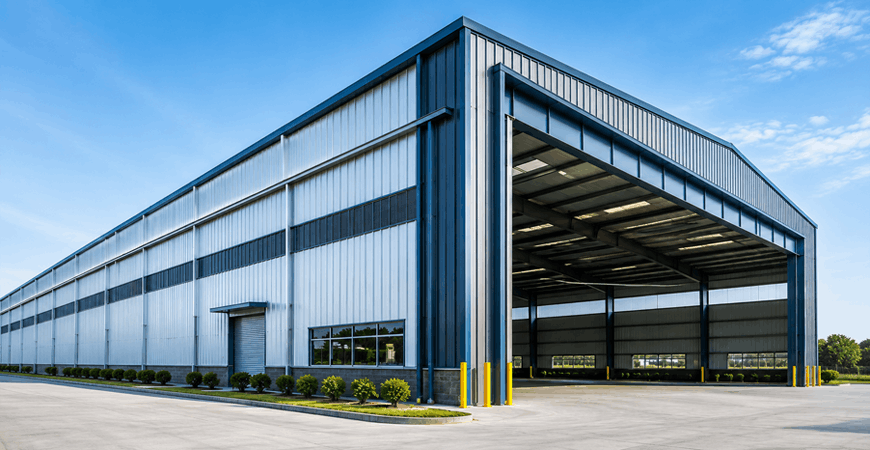
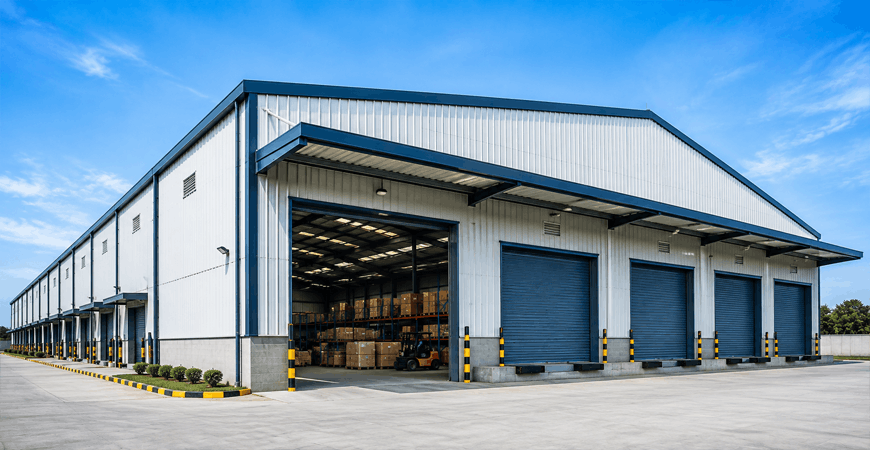
- Industrial Buildings
- Warehouses
- Factories
- Commercial Buildings
- Site Offices
- Labour Camps
- Workshops
- Storage Facilities
- Institutional Buildings
Prefabricated Structure vs. Conventional Construction
The biggest difference is where the construction work takes place.
With conventional construction, many activities are performed directly at the project site. Prefabrication moves a substantial portion of the manufacturing process into a factory, while the finished components are later transported and assembled at the site.
This approach can help improve construction speed, quality control, material efficiency, and site management.
Why Choose Prefabricated Structures?
For businesses planning a new industrial or commercial facility, prefabrication offers a modern approach to construction. It combines factory-controlled manufacturing with efficient on-site assembly, making it particularly useful when project timelines, quality, and construction efficiency are important.
The right solution will depend on factors such as building size, structural requirements, site conditions, intended use, transportation requirements, and budget.
Conclusion
Prefabricated structures are engineered for efficiency and built for modern construction needs.
By manufacturing components under controlled conditions and assembling them efficiently at the project site, prefabrication can provide a practical combination of speed, precision, quality, flexibility, and durability.
Whether you are developing a warehouse, factory, industrial building, commercial facility, or site office, a properly designed prefabricated structure can help create a reliable and efficient building solution.
Build Smarter. Build Better.
Building Better Solutions Together